A tower for a changing city
Resilient engineering, Edo aesthetics, and modern light.
Table of Contents
Origins of Tokyo Skytree
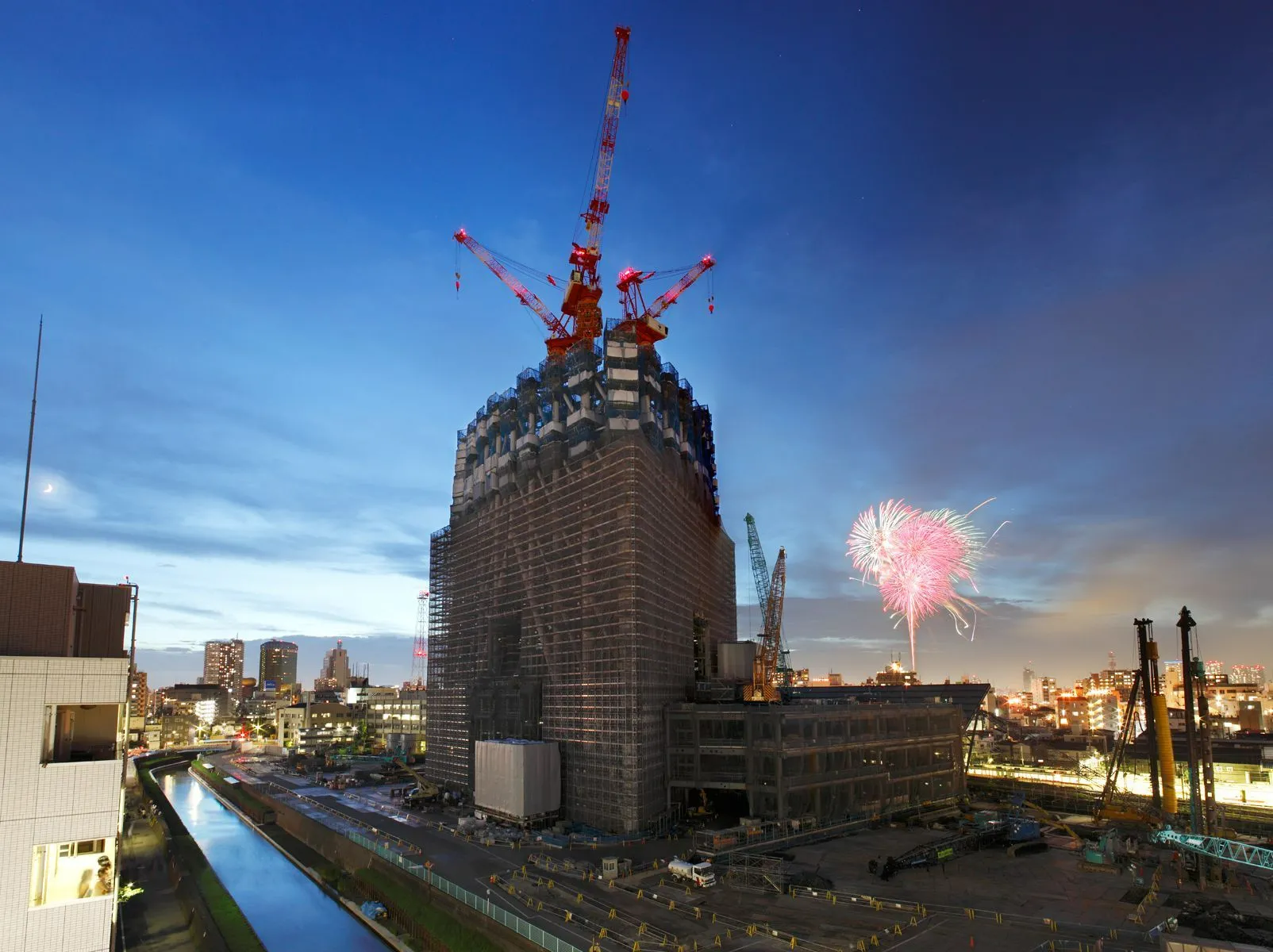
Tokyo Skytree began as a practical idea: a tower tall enough to deliver clear digital broadcasts across a sprawling metropolis of high‑rise silhouettes. As Tokyo’s skyline grew, the older transmitters struggled with shadows and interference. The answer was to build higher — not only to strengthen the signal, but to create a new place where residents and visitors could see their city with fresh eyes.
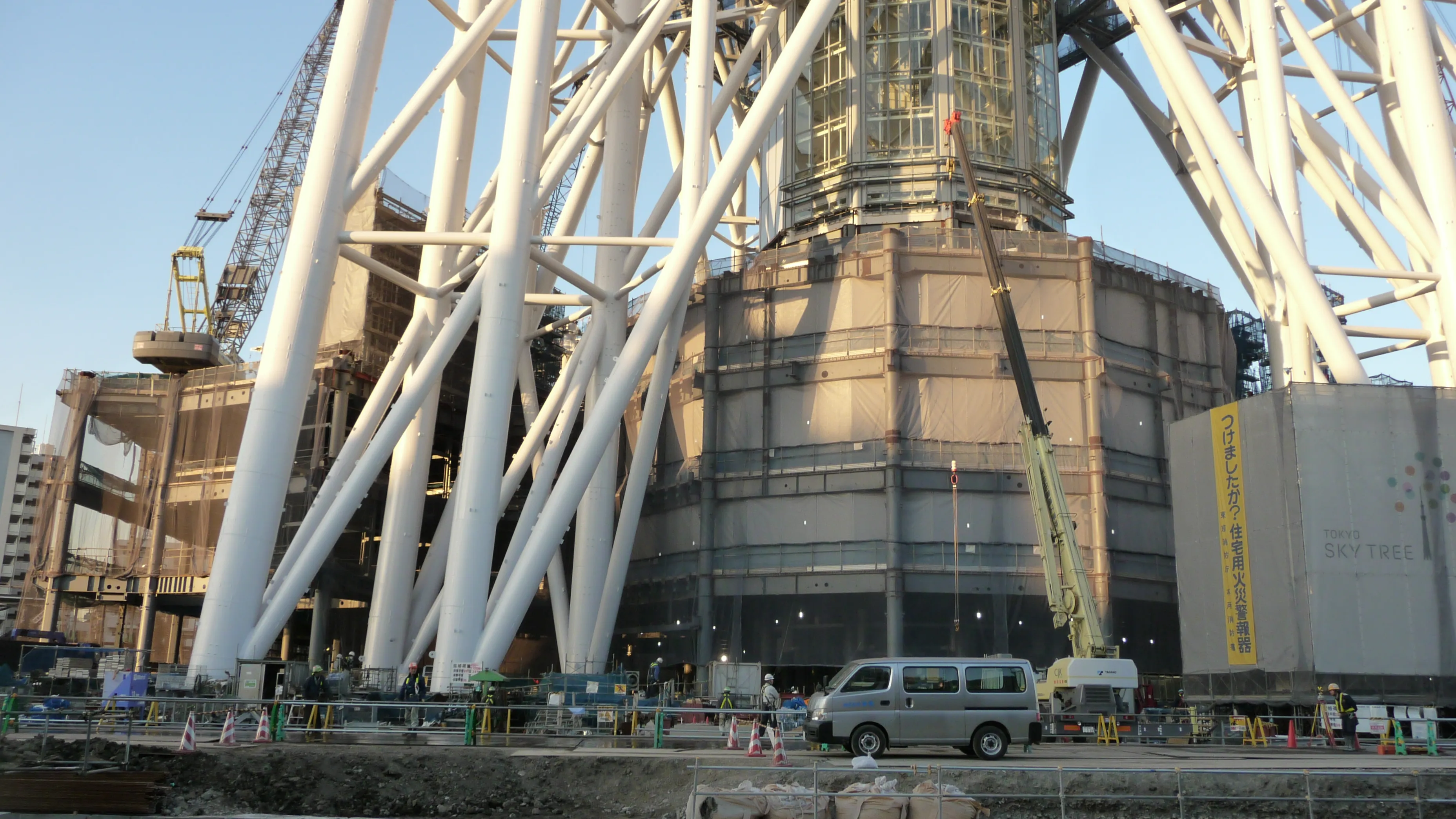
The site in Sumida, near the Sumida River and across from historic Asakusa, set the project within Tokyo’s living history. Designers drew on Edo aesthetics — subtle curves, refined simplicity, and a sense of balance — while engineering teams envisioned a structure that could stand quietly and confidently amid earthquakes and strong winds. What rose from the riverside foundations was more than a transmitter: it was a landmark for everyday life, opening in 2012 and instantly reshaping the horizon.
Design and engineering
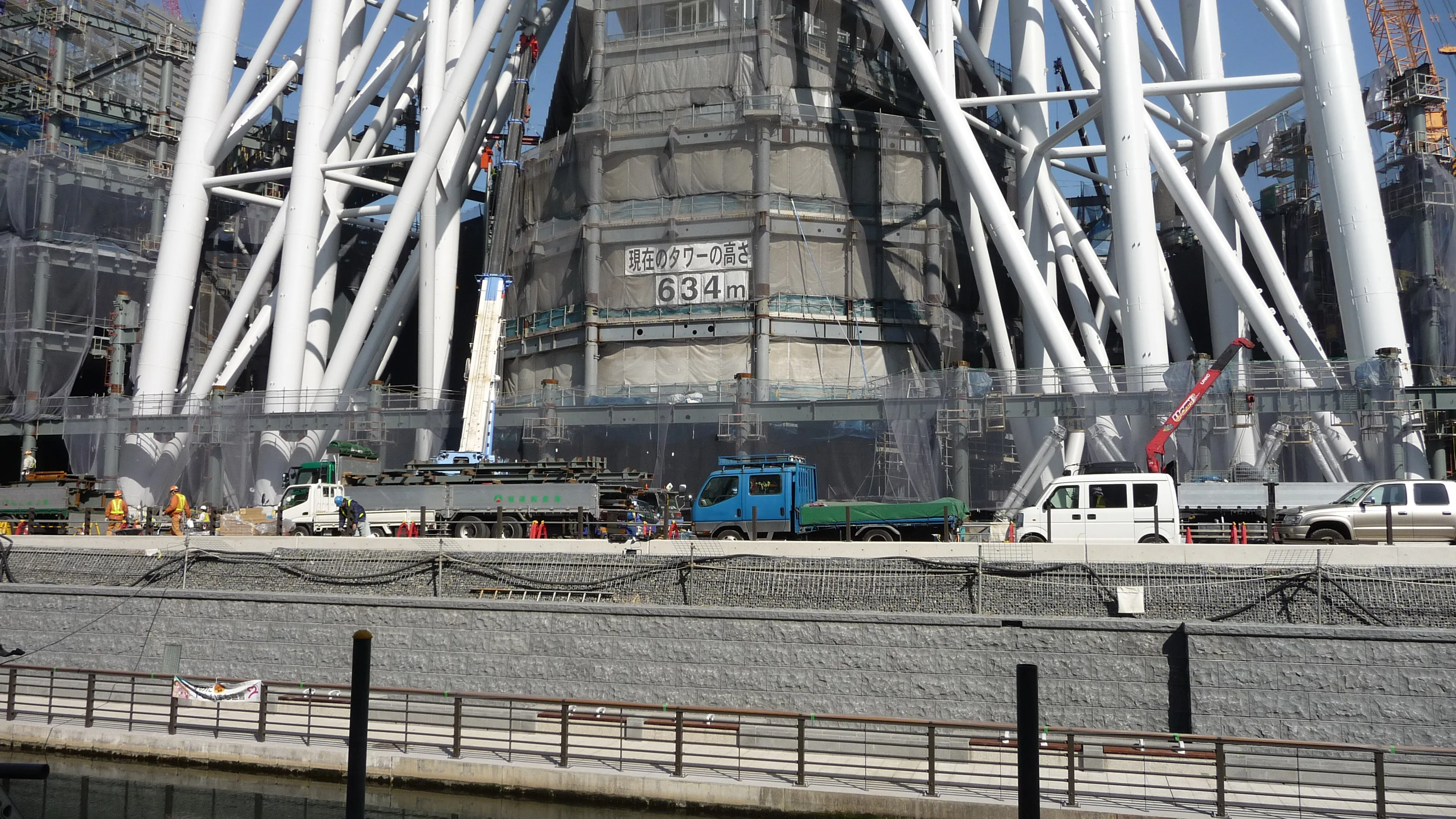
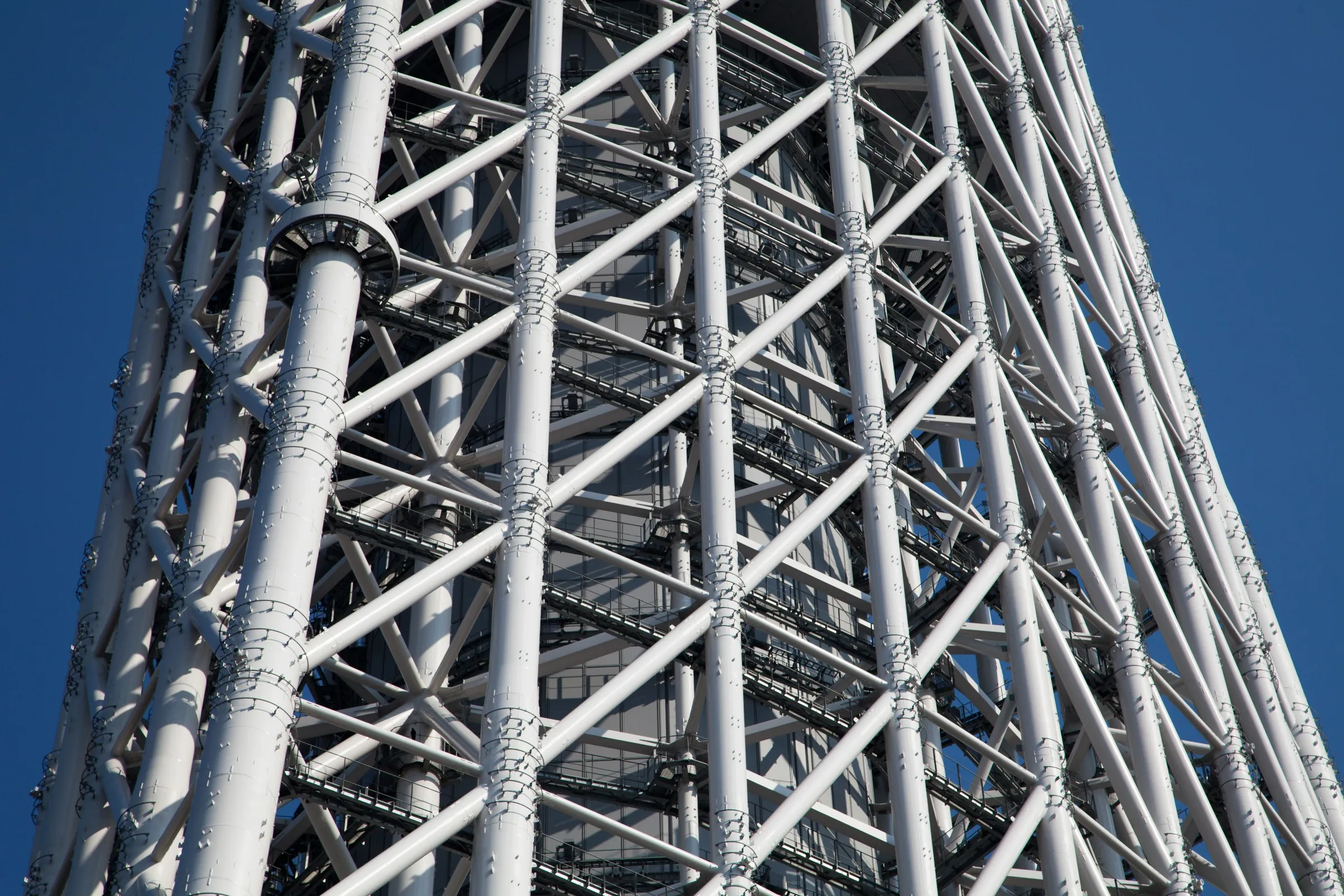
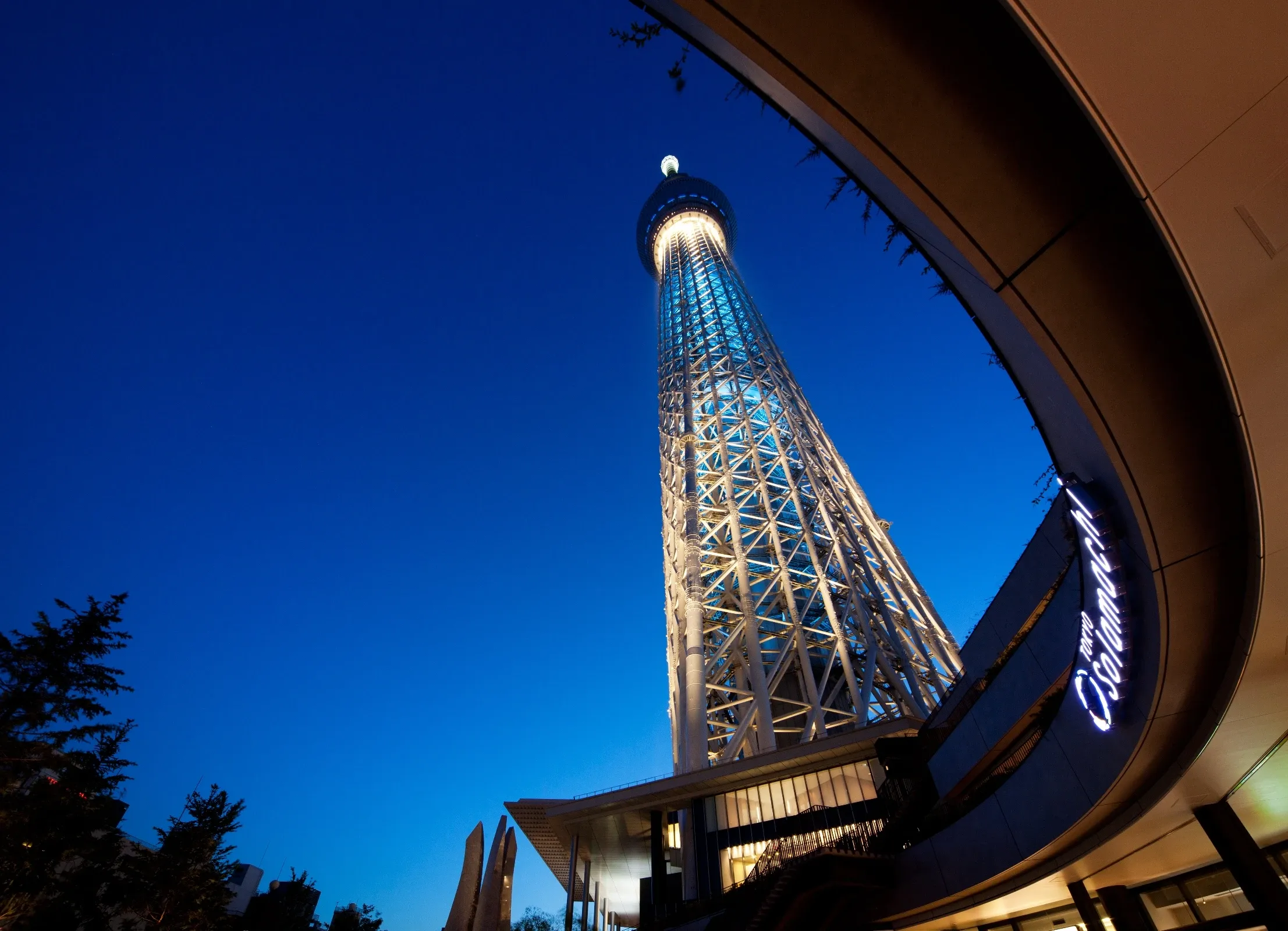
Skytree’s form is deceptively simple: a slim triangle at the base that gradually rounds as it rises, a nod to traditional craftsmanship and aerodynamic stability. Inside, a central reinforced shaft acts as a modern ‘shinbashira’ — inspired by the flexible core of wooden pagodas — helping the tower absorb and disperse seismic energy. The result is a quiet resilience you can feel but rarely notice: elevators glide, the decks remain calm, and the city seems to float around you.
Materials and geometry work together. High‑strength steel, tuned mass dampers, and carefully modeled wind behavior allow the tower to stand steady in seasonal storms. Even the glass — broad, bright, and carefully angled — is chosen to invite light while minimizing glare. At night, an illumination program paints the tower with soft palettes — ‘Iki’ and ‘Miyabi’ — echoing Edo culture in a contemporary glow.
Broadcasting and the city
Tokyo Skytree’s core purpose is broadcasting: delivering clean signals for television and radio across one of the world’s largest urban fabrics. Its height clears the rooflines that once fractured transmission, while carefully arranged antenna arrays reduce interference. The tower’s technical mission supports everyday routines — morning news, sports, dramas — the soundtrack of city life.
Around that mission grew a new neighborhood identity. Skytree Town became a gentle daily magnet: commuters pass through, families meet for weekend lunches, travelers weave it into journeys between Asakusa and the river. Broadcasting remains the tower’s heartbeat, but the decks and the town enliven it, drawing people to the skyline it serves.
Skytree Town: life around the tower
Tokyo Solamachi, at the base of the tower, blends local flavors with everyday convenience: confectioners share space with bookstores, design shops sit near ramen counters, and seasonal pop‑ups keep things playful. It’s the kind of place where a quick snack turns into a slow wander, where the shadow of the tower reminds you gently to look up.
Sumida Aquarium next door offers a luminous world of jellyfish, penguins, and careful aquatic design. Families, couples, and solo visitors weave in and out — some arriving from Asakusa, some from the airport, others from hotel strolls. Together, the decks and the town make Skytree feel complete: sky above, river beside, and everyday Tokyo at your feet.
Views, seasons & light
The view is never the same twice. In winter, crisp air sharpens distant mountains; in spring, parks blush with cherry blossoms; in summer, rivers glint and festivals sparkle; in autumn, clear blue skies stretch long and generous. From the decks, Tokyo unfolds as a tapestry — trains tracing lines, neighborhoods clustering, and green pockets breathing within the city.
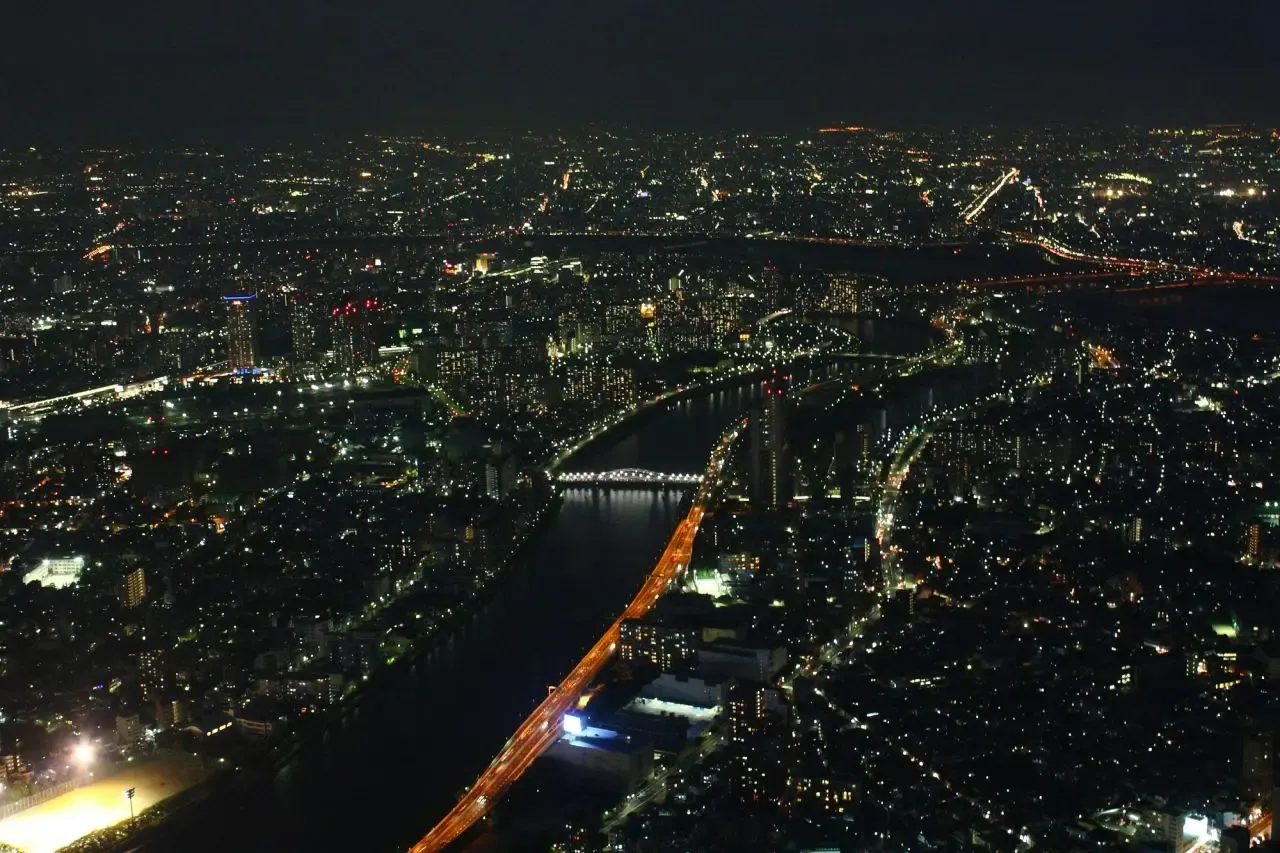
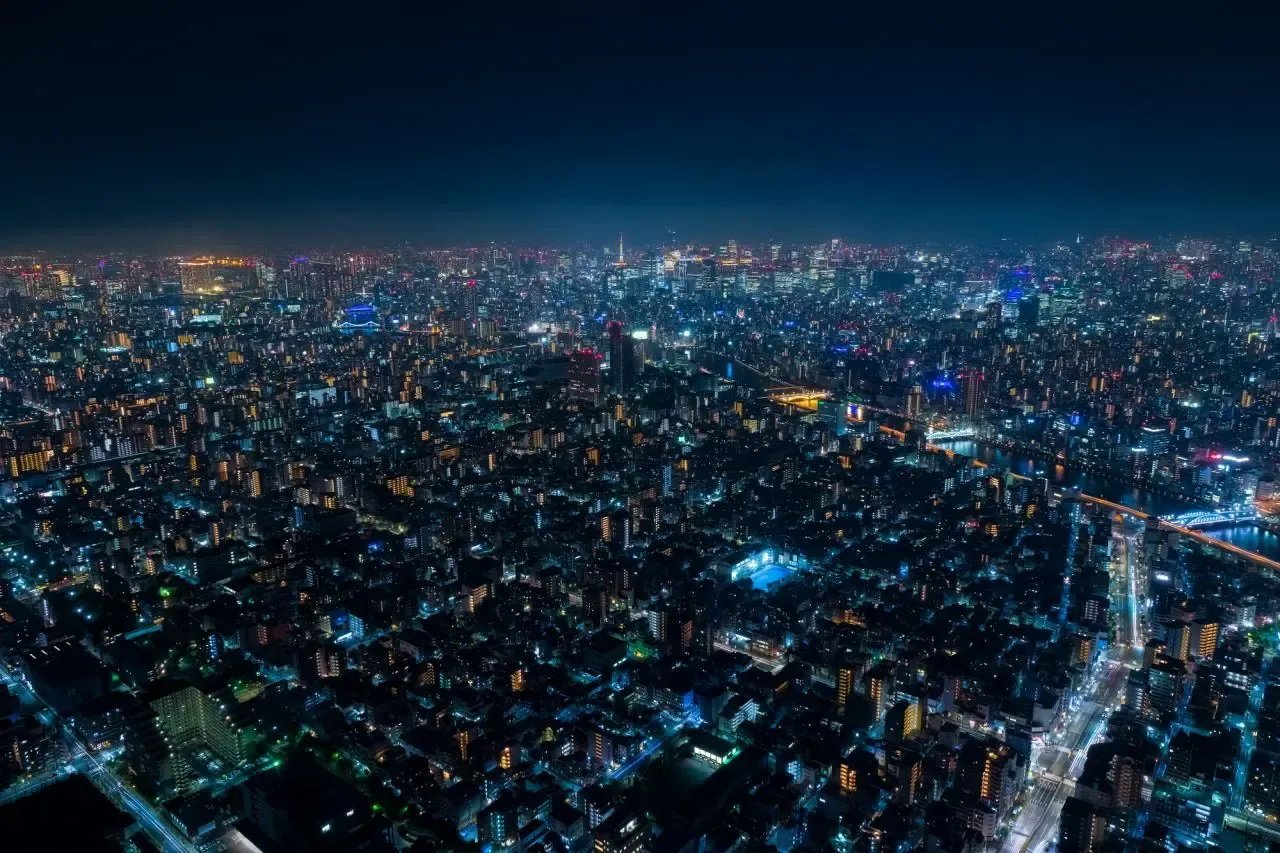
Light shapes mood: morning brings clarity and gentle calm, sunset paints bronze edges on rooftops, and night wraps the city in neon and reflection. The decks invite lingering — not just quick photos — a quiet pause with the horizon that helps you place yourself within the city’s rhythm.
Experiences on the decks
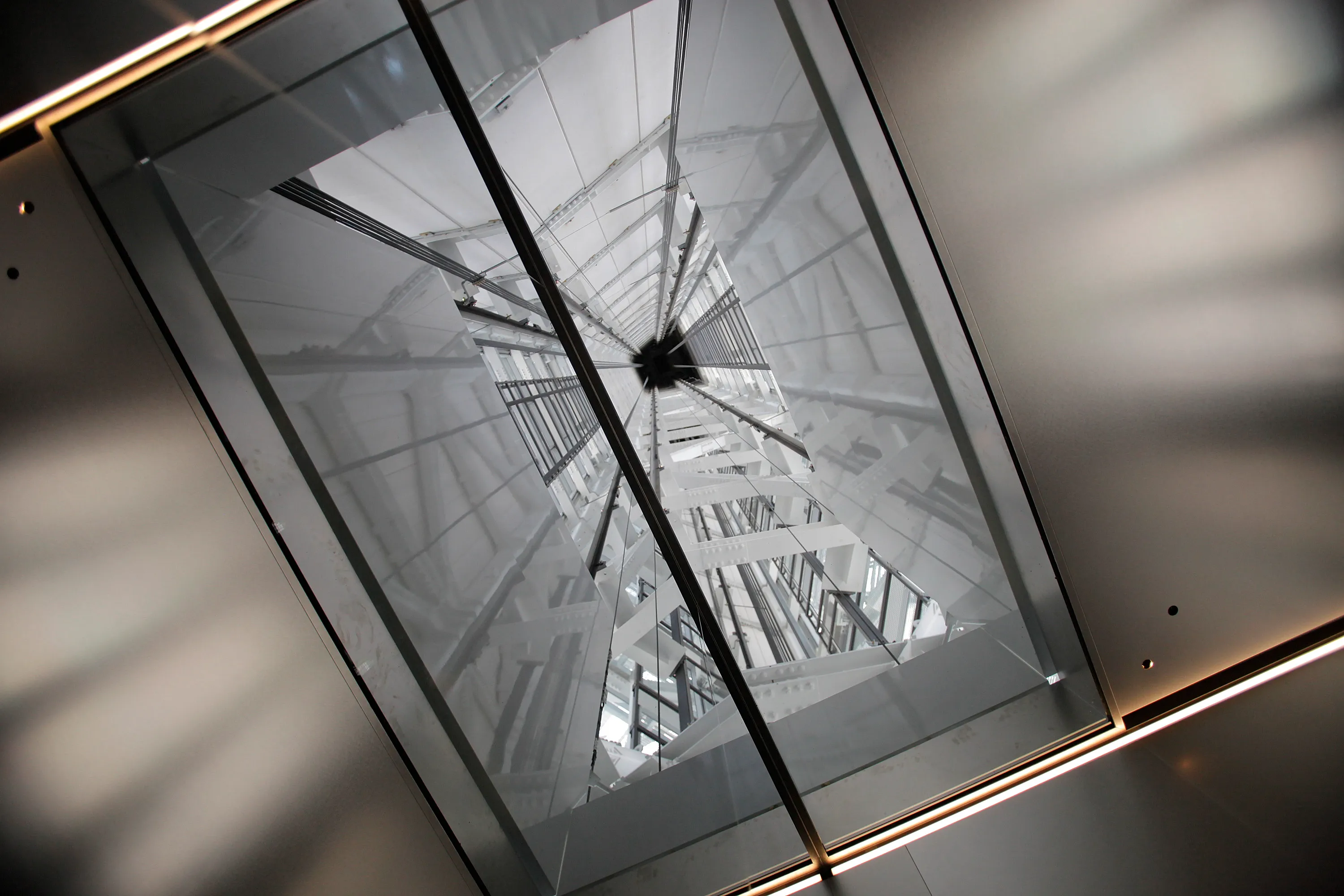
Tembo Deck’s glass floors add a playful thrill — look down if you dare! Interactive maps help you locate districts, while cafés offer a small pause between windows. The space is designed to be generous, so even at busy times you can usually find a quiet corner to breathe in the view.
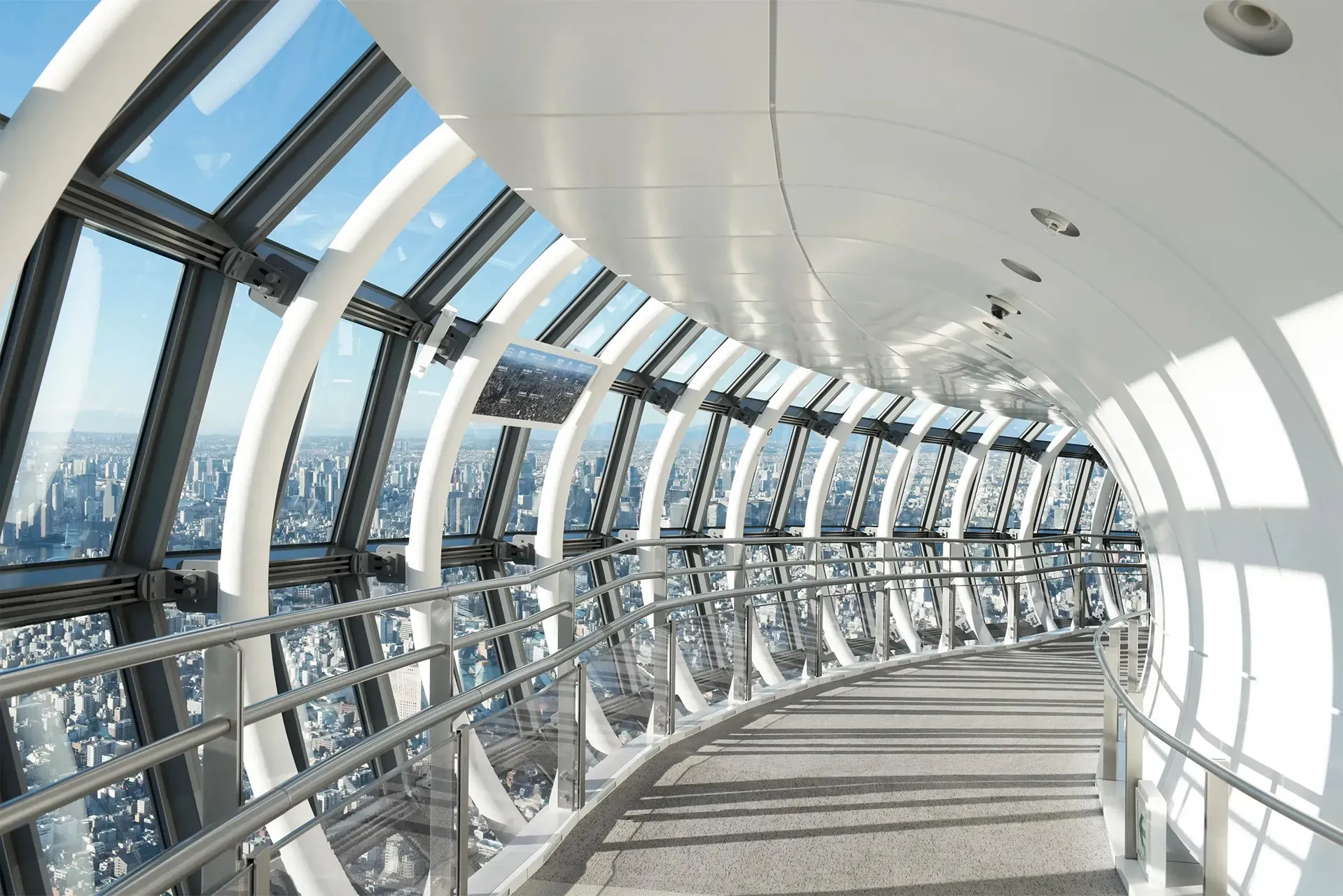
Tembo Galleria elevates the mood further: its gentle ramp curves through a bright corridor, almost like walking inside a ribbon of air. Music and light are subtle, and the city hums below. For many visitors, this is the calmest moment — a soft, floating walk before returning to the buzz of Tokyo.
Access, transport & rivers
Skytree is among Tokyo’s easiest landmarks to reach: Tobu Skytree Line to Tokyo Skytree Station; Hanzomon, Asakusa, and Keisei lines to Oshiage Station. Transfers from major hubs are straightforward, and signage is clear.
The Sumida River adds a gentle rhythm to the journey. Many visitors pair Skytree with Asakusa’s temples, shopping streets, and river cruises — a classic day that blends old and new Tokyo.
Safety & accessibility
Elevators connect all public areas, and staff are trained to assist. Ramps, accessible restrooms, and wide corridors make deck navigation simple. During peak times, timed entries help maintain comfortable flow.
Operational adjustments may occur during extreme weather or maintenance — check official updates on the day of your visit.
Culture, events & illumination
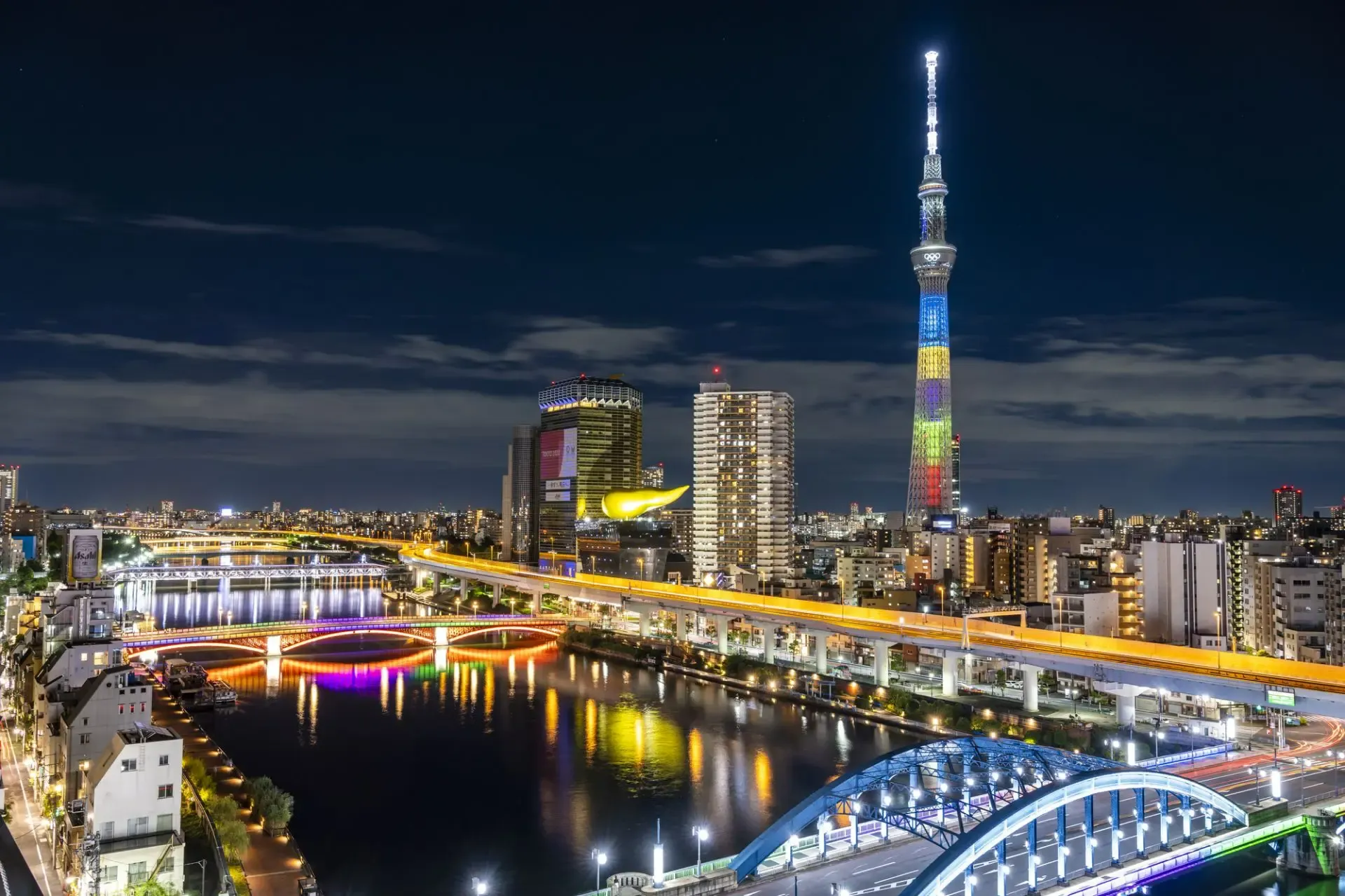
Skytree’s illumination palettes — ‘Iki’ and ‘Miyabi’ — color the night with a refined glow. Seasonal programs celebrate festivals and community events, sometimes synchronizing with fireworks or river activities.
Inside Skytree Town, pop‑ups and showcases keep things lively. It’s a place that feels busy without hurry — a gentle stage for everyday Tokyo.
Tickets, passes & timing
Book timed entry for the decks, add Tembo Galleria, and consider bundles with nearby highlights like Sumida Aquarium.
Sunset and weekends sell quickly; evening slots offer stunning night views with fewer crowds.
Preservation, sustainability & community
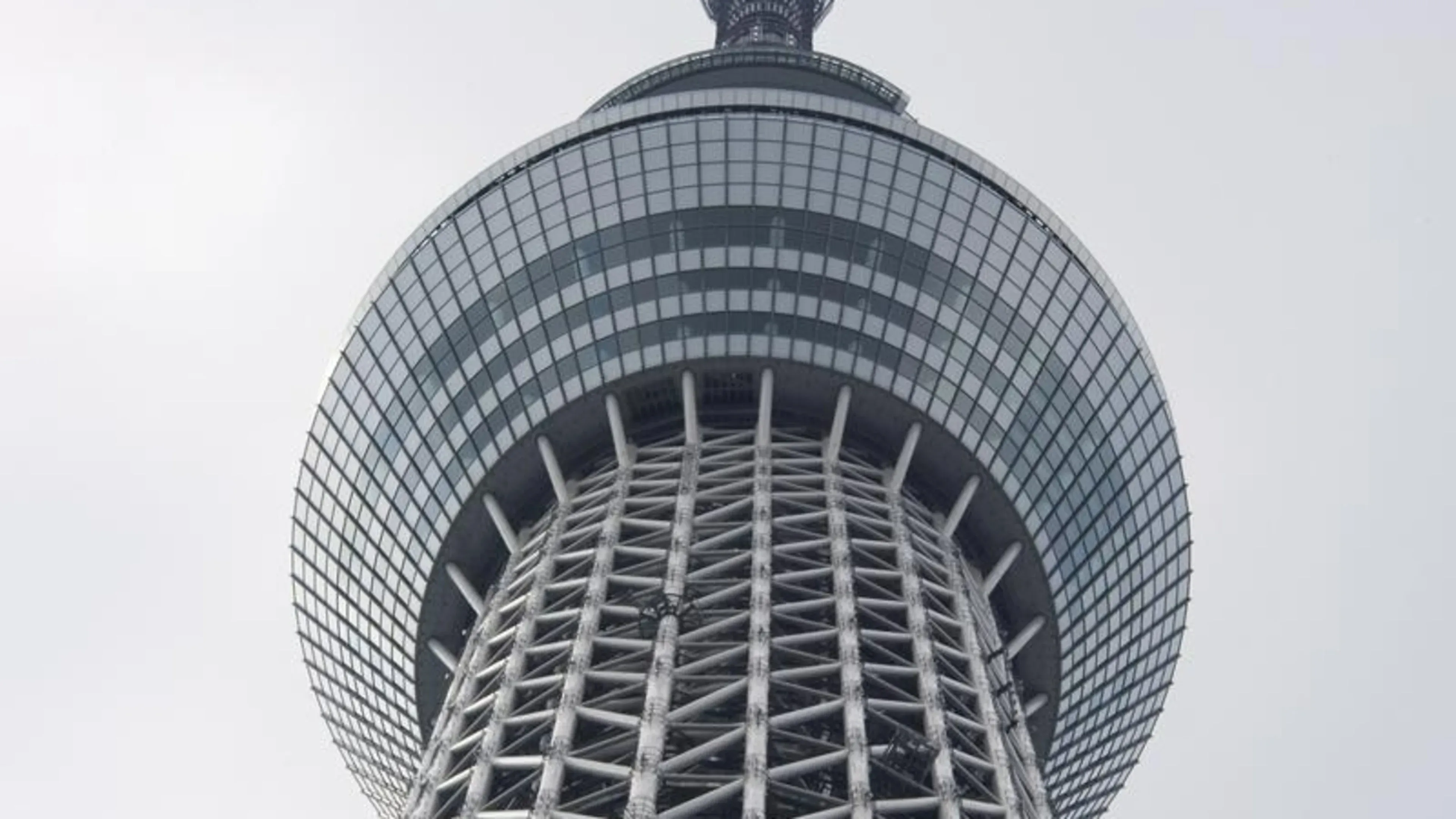
The tower’s design and operations emphasize safety, efficiency, and neighborhood vitality — from public transport connectivity to energy‑aware illumination and accessible spaces.
Choosing off‑peak times, using public transit, and taking your time on the decks reduces strain and turns your visit into a calmer, more considerate experience.
Nearby Asakusa & riverside walks
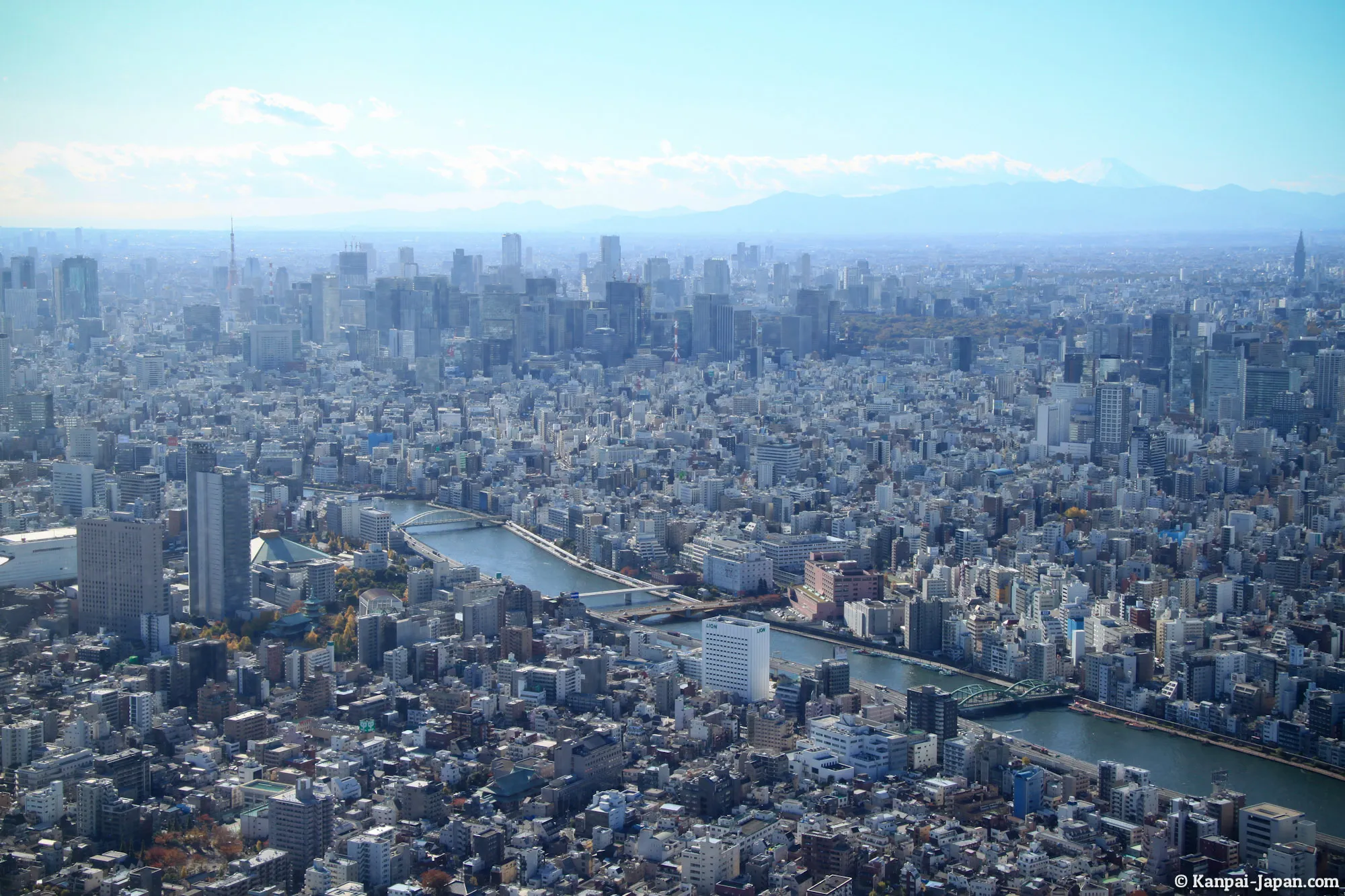
Asakusa’s Senso‑ji, Nakamise shopping street, and side alleys make a perfect pairing with Skytree — tradition and city views in one relaxed day.
Riverside paths along the Sumida invite slow walks, photos, and occasional boat rides — a simple way to let Tokyo breathe around you.
Why this tower matters
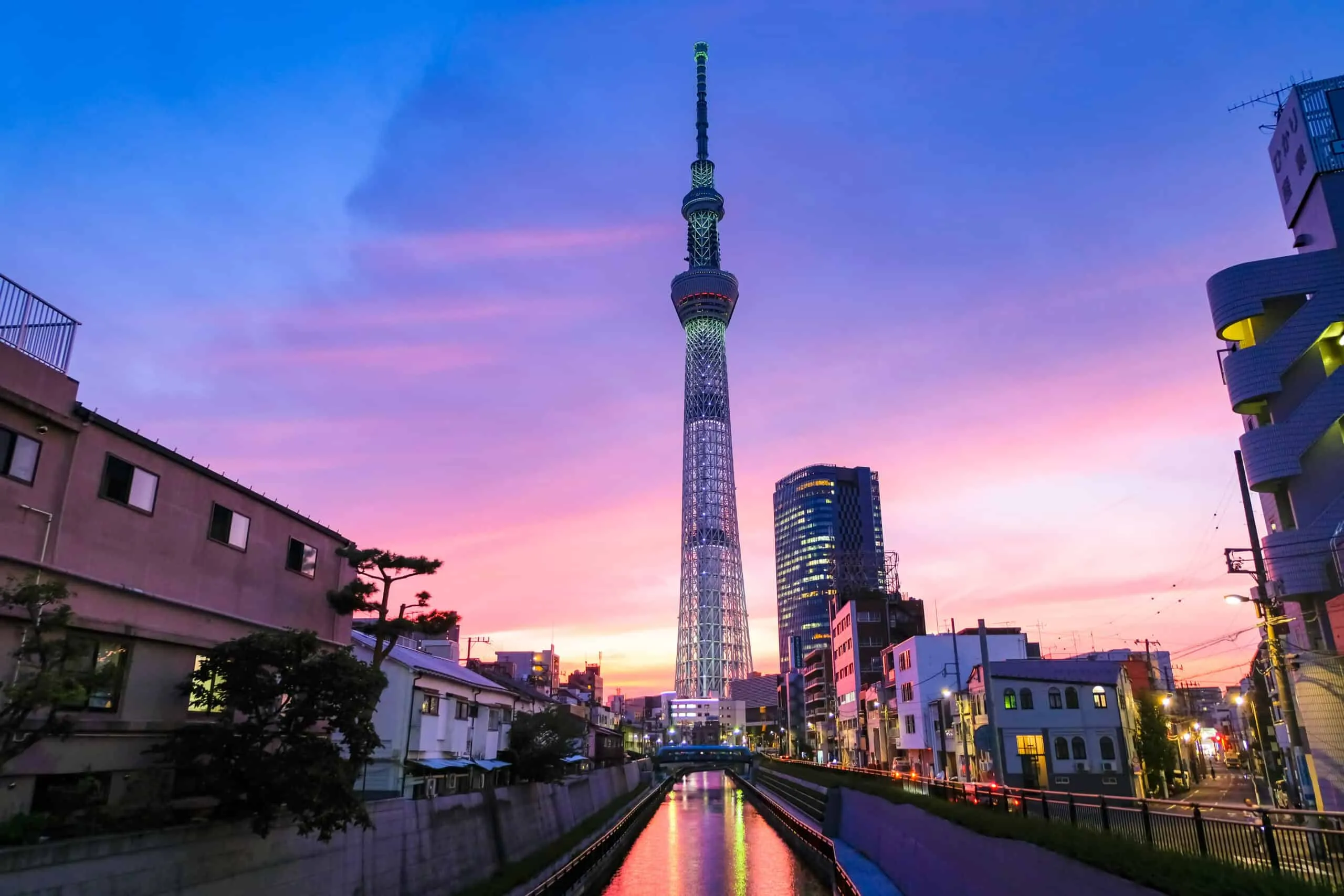
Tokyo Skytree is a careful balance of purpose and poetry: a broadcasting tower that becomes a place to feel the city’s scale, a landmark that softens evenings with light, and a daily meeting point for residents and travelers.
It makes the horizon legible. From high windows, Tokyo’s complexity becomes understandable; from the ground, the tower adds a gentle constant to a changing city. Visiting is as much about perspective as it is about height.
Table of Contents
Origins of Tokyo Skytree
Tokyo Skytree began as a practical idea: a tower tall enough to deliver clear digital broadcasts across a sprawling metropolis of high‑rise silhouettes. As Tokyo’s skyline grew, the older transmitters struggled with shadows and interference. The answer was to build higher — not only to strengthen the signal, but to create a new place where residents and visitors could see their city with fresh eyes.
The site in Sumida, near the Sumida River and across from historic Asakusa, set the project within Tokyo’s living history. Designers drew on Edo aesthetics — subtle curves, refined simplicity, and a sense of balance — while engineering teams envisioned a structure that could stand quietly and confidently amid earthquakes and strong winds. What rose from the riverside foundations was more than a transmitter: it was a landmark for everyday life, opening in 2012 and instantly reshaping the horizon.
Design and engineering
Skytree’s form is deceptively simple: a slim triangle at the base that gradually rounds as it rises, a nod to traditional craftsmanship and aerodynamic stability. Inside, a central reinforced shaft acts as a modern ‘shinbashira’ — inspired by the flexible core of wooden pagodas — helping the tower absorb and disperse seismic energy. The result is a quiet resilience you can feel but rarely notice: elevators glide, the decks remain calm, and the city seems to float around you.
Materials and geometry work together. High‑strength steel, tuned mass dampers, and carefully modeled wind behavior allow the tower to stand steady in seasonal storms. Even the glass — broad, bright, and carefully angled — is chosen to invite light while minimizing glare. At night, an illumination program paints the tower with soft palettes — ‘Iki’ and ‘Miyabi’ — echoing Edo culture in a contemporary glow.
Broadcasting and the city
Tokyo Skytree’s core purpose is broadcasting: delivering clean signals for television and radio across one of the world’s largest urban fabrics. Its height clears the rooflines that once fractured transmission, while carefully arranged antenna arrays reduce interference. The tower’s technical mission supports everyday routines — morning news, sports, dramas — the soundtrack of city life.
Around that mission grew a new neighborhood identity. Skytree Town became a gentle daily magnet: commuters pass through, families meet for weekend lunches, travelers weave it into journeys between Asakusa and the river. Broadcasting remains the tower’s heartbeat, but the decks and the town enliven it, drawing people to the skyline it serves.
Skytree Town: life around the tower
Tokyo Solamachi, at the base of the tower, blends local flavors with everyday convenience: confectioners share space with bookstores, design shops sit near ramen counters, and seasonal pop‑ups keep things playful. It’s the kind of place where a quick snack turns into a slow wander, where the shadow of the tower reminds you gently to look up.
Sumida Aquarium next door offers a luminous world of jellyfish, penguins, and careful aquatic design. Families, couples, and solo visitors weave in and out — some arriving from Asakusa, some from the airport, others from hotel strolls. Together, the decks and the town make Skytree feel complete: sky above, river beside, and everyday Tokyo at your feet.
Views, seasons & light
The view is never the same twice. In winter, crisp air sharpens distant mountains; in spring, parks blush with cherry blossoms; in summer, rivers glint and festivals sparkle; in autumn, clear blue skies stretch long and generous. From the decks, Tokyo unfolds as a tapestry — trains tracing lines, neighborhoods clustering, and green pockets breathing within the city.
Light shapes mood: morning brings clarity and gentle calm, sunset paints bronze edges on rooftops, and night wraps the city in neon and reflection. The decks invite lingering — not just quick photos — a quiet pause with the horizon that helps you place yourself within the city’s rhythm.
Experiences on the decks
Tembo Deck’s glass floors add a playful thrill — look down if you dare! Interactive maps help you locate districts, while cafés offer a small pause between windows. The space is designed to be generous, so even at busy times you can usually find a quiet corner to breathe in the view.
Tembo Galleria elevates the mood further: its gentle ramp curves through a bright corridor, almost like walking inside a ribbon of air. Music and light are subtle, and the city hums below. For many visitors, this is the calmest moment — a soft, floating walk before returning to the buzz of Tokyo.
Access, transport & rivers
Skytree is among Tokyo’s easiest landmarks to reach: Tobu Skytree Line to Tokyo Skytree Station; Hanzomon, Asakusa, and Keisei lines to Oshiage Station. Transfers from major hubs are straightforward, and signage is clear.
The Sumida River adds a gentle rhythm to the journey. Many visitors pair Skytree with Asakusa’s temples, shopping streets, and river cruises — a classic day that blends old and new Tokyo.
Safety & accessibility
Elevators connect all public areas, and staff are trained to assist. Ramps, accessible restrooms, and wide corridors make deck navigation simple. During peak times, timed entries help maintain comfortable flow.
Operational adjustments may occur during extreme weather or maintenance — check official updates on the day of your visit.
Culture, events & illumination
Skytree’s illumination palettes — ‘Iki’ and ‘Miyabi’ — color the night with a refined glow. Seasonal programs celebrate festivals and community events, sometimes synchronizing with fireworks or river activities.
Inside Skytree Town, pop‑ups and showcases keep things lively. It’s a place that feels busy without hurry — a gentle stage for everyday Tokyo.
Tickets, passes & timing
Book timed entry for the decks, add Tembo Galleria, and consider bundles with nearby highlights like Sumida Aquarium.
Sunset and weekends sell quickly; evening slots offer stunning night views with fewer crowds.
Preservation, sustainability & community
The tower’s design and operations emphasize safety, efficiency, and neighborhood vitality — from public transport connectivity to energy‑aware illumination and accessible spaces.
Choosing off‑peak times, using public transit, and taking your time on the decks reduces strain and turns your visit into a calmer, more considerate experience.
Nearby Asakusa & riverside walks
Asakusa’s Senso‑ji, Nakamise shopping street, and side alleys make a perfect pairing with Skytree — tradition and city views in one relaxed day.
Riverside paths along the Sumida invite slow walks, photos, and occasional boat rides — a simple way to let Tokyo breathe around you.
Why this tower matters
Tokyo Skytree is a careful balance of purpose and poetry: a broadcasting tower that becomes a place to feel the city’s scale, a landmark that softens evenings with light, and a daily meeting point for residents and travelers.
It makes the horizon legible. From high windows, Tokyo’s complexity becomes understandable; from the ground, the tower adds a gentle constant to a changing city. Visiting is as much about perspective as it is about height.